Serving Birmingham & nearby
Whole-home Generator Installation Birmingham
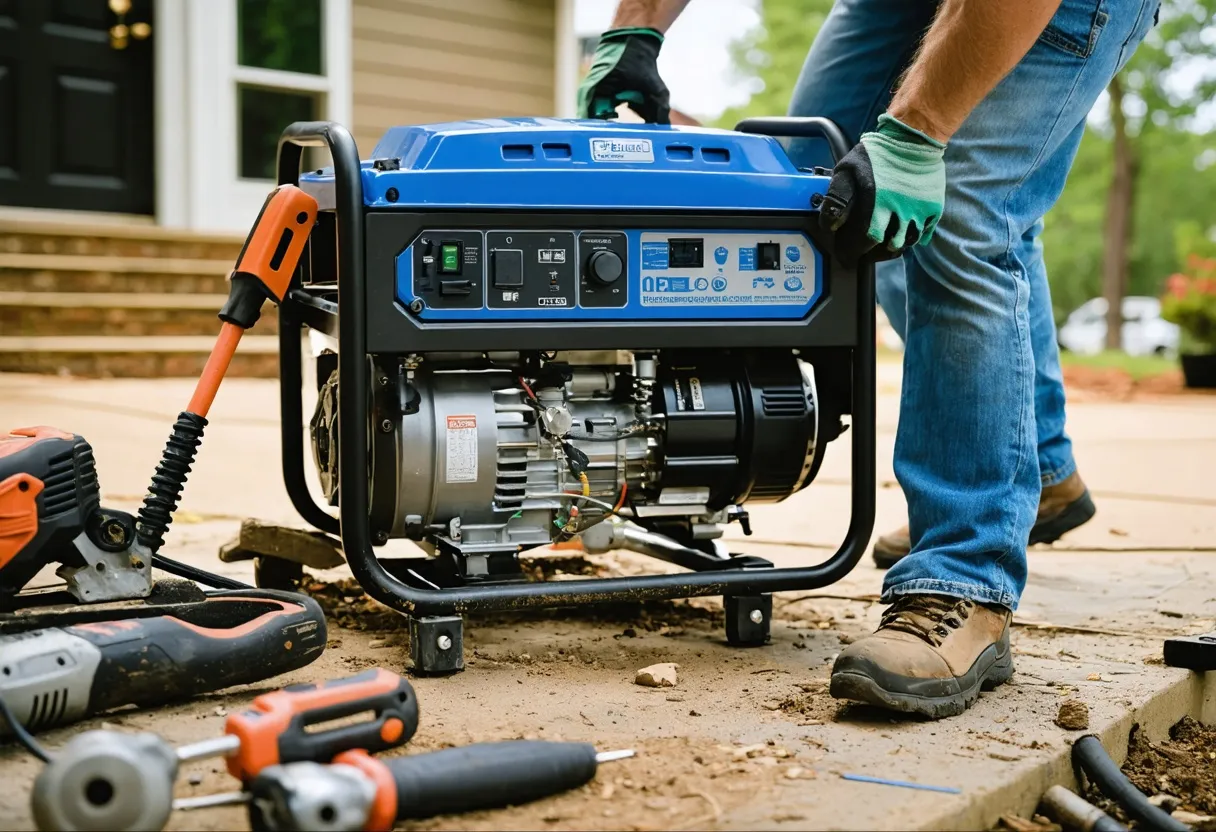
Central Alabama's storm season has a way of turning generator shopping into an emergency errand. A line of high-wind thunderstorms rolls through Jefferson County, a transformer or a tree-heavy feeder line goes down, and suddenly every Birmingham homeowner on that circuit is calling installers at the same time, comparing quotes under pressure instead of comparing them clearly. That is the worst possible moment to make a five-figure decision about equipment sizing, permitting, and financing terms you have never had explained to you in plain language.
This page is built to flip that timeline around. Before you talk to anyone, you can see the concrete factors that move an installed whole-home generator installation price up or down in Birmingham and Jefferson County, the financing terms worth reading twice, and the exact sequence a job follows from the first site visit to the final municipal inspection. None of it requires booking a call first. The itemized breakdown, the process, and the tradeoffs a rushed quote tends to skip are all below — the way they should have been available to you before you ever picked up the phone.
What Actually Moves the Installed Price in Birmingham
Ask five Birmingham homeowners what their whole-home generator cost and you will get five different answers, and almost none of the difference is arbitrary markup. It traces back to a short list of variables that any honest installer should walk you through line by line, not bury in a single "starting at" figure meant to get you on the phone.
Generator capacity is the biggest lever. A unit sized to carry your central air compressor's startup surge, your well pump if you have one, and the rest of your panel costs more than one sized to shed non-essential circuits during an outage — and sizing by price instead of by an actual load calculation is the single most common way Birmingham homeowners end up disappointed the first time they need the system. Fuel type and gas line length matter too: propane and natural gas setups price differently, and the further your unit sits from the existing gas meter, the more materials and labor go into that run. Transfer switch scope — whether every circuit in your panel gets backed up or a load-managed switch prioritizes the essentials — changes both the equipment cost and the labor hours. Older housing stock around Birmingham, especially in neighborhoods like Homewood and Mountain Brook where panels were often installed decades before whole-home standby power was common, sometimes needs a panel upgrade or subpanel work before the new equipment can go in at all, and that is a cost driver worth flagging at the estimate stage rather than discovering mid-install. Finally, site conditions and permit fees — pad prep, distance from the panel, accessibility, and the specific municipal fee schedule within Jefferson County — round out the total.
A transparent quote itemizes every one of these instead of collapsing them into one number. If a quote you received doesn't break down capacity, fuel line, switch scope, panel work, and permitting separately, ask for that breakdown before you sign — it's the difference between understanding what you're paying for and just trusting that it's fair.
What a Complete Whole-Home Installation Actually Includes
How a Birmingham Installation Runs, Start to Finish
A technician walks the panel and property in person, not over the phone, to document circuits, appliances, gas meter location, and setback constraints before anything is quoted as final.
Capacity, fuel line, transfer switch scope, and any panel work are calculated from the load analysis and presented as separate line items, not a single bundled number.
Crews set the equipment pad to spec, run and pressure-test the gas line, and pull the electrical connections between generator, transfer switch, and main panel.
Electrical and gas permits are pulled through the relevant Jefferson County or municipal authority, and a final inspection confirms grounding, clearances, and gas line integrity before the system is signed off.
The system is run under a real load test to confirm the transfer switch triggers correctly and every backed-up circuit receives power, then you're walked through the self-test schedule and any monitoring app.
Financing Terms Worth Reading Before You Sign
Most Birmingham homeowners finance some or all of a whole-home system rather than paying the full installed cost upfront, and that's reasonable — this is comparable to other major home systems people routinely finance. Where things go sideways is in the fine print, because financing conversations tend to emphasize the monthly payment and gloss over the terms that determine what you actually pay over time.
There are generally a few structures on offer: fixed monthly-payment plans through a third-party lender, promotional same-as-cash windows for buyers who intend to pay off the balance before a set deadline, and occasionally manufacturer-backed financing tied to a specific equipment line. Before agreeing to any of them, get three things in writing: the actual APR that applies once a promotional period ends, whether there's a prepayment penalty if you pay it off early, and whether financing approval changes the quoted equipment price at all. That last one matters more than people expect — some offers quietly inflate the cash price to make the financed monthly number look better by comparison. If a lender or installer can't explain their terms in a sentence or two without redirecting you to "just sign here and we'll walk through it," treat that as a reason to slow down, not speed up.
None of this is a reason to avoid financing a whole-home system. It's a reason to insist the terms are as itemized as the installation quote itself.
Storm Season Doesn't Wait for a Sales Call
Central Alabama's severe-weather corridor produces high-wind events and thunderstorm clusters that can knock out power for hours or, in the worst cases, several days depending on damage and crew availability. The homeowners who ride those outages out comfortably are the ones who made the decision before the storm, not during it.
Questions Birmingham Homeowners Ask Before They Buy
Almost always it comes down to what's included versus what's quoted separately afterward — pad prep, gas line length, transfer switch scope, and any panel upgrade work can each be bundled or excluded, so two quotes for the same kW rating can differ significantly. Ask each installer for an itemized breakdown before comparing totals.
Financing is common and typically structured as fixed monthly payments, a promotional same-as-cash period, or manufacturer-backed plans tied to specific equipment. The terms to scrutinize are the post-promotional APR, any prepayment penalty, and whether financing changes the quoted cash price.
Yes. Both the electrical and gas connections require permits through the applicable Jefferson County or municipal authority, followed by a final inspection. Skipping this step can complicate an insurance claim or a future home sale, on top of forgoing the safety check the inspection provides.
The physical installation — pad, gas line, electrical, and transfer switch — usually runs one to two days once permits are approved. Permitting and inspection scheduling on either end can add one to several weeks depending on the municipality, so plan on weeks rather than days from signed quote to operational system.
Yes, within reason. A load-managed switch prioritizes essential circuits — HVAC, refrigeration, well pump, sump pump — and sheds non-critical loads automatically, which can let a smaller unit carry the home effectively. Whether that tradeoff makes sense for you depends on your panel setup and which circuits you're not willing to compromise on.
Ask directly about state electrical licensing, manufacturer dealer certification, whether they pull permits as standard practice rather than an upsell, and whether emergency repair calls after installation are answered by an actual technician around the clock or routed to next-business-day callbacks.
Serving Birmingham and the Over-the-Mountain Suburbs
Installation considerations shift block by block across the metro. Older housing stock, tree canopy density, and utility infrastructure age all vary between neighborhoods, which is part of why a load analysis at your specific address matters more than a generic quote. Coverage across the area includes Birmingham proper along with Mountain Brook, Vestavia Hills, Homewood, Hoover, and Pelham, each with its own permitting quirks within Jefferson County that a locally grounded installer should already know rather than learning on your job.
Proximity matters for more than convenience. A crew and permitting process familiar with a specific municipality's inspection expectations reduces the odds of a failed inspection turning into a rescheduled visit — which matters even more heading into storm season, when scheduling windows tighten as demand spikes across the region all at once. If you're weighing whether to move on an installation now versus after the next outage, the honest answer is that the itemized numbers and financing terms above don't change based on urgency — but installer availability does.
Get Your Itemized Quote
Free, no-obligation pricing broken down line by line — no pressure to decide today.
More generator installation services
Don't Wait for the Next Outage
Get an itemized generator quote now and be ready before Central Alabama's next storm season hits.